

Key Takeaways
- Apostilles themselves do not have an expiration date under the Hague Apostille Convention—the certificate permanently validates the signature and seal on the document at the time of issuance.
- The apostille certifies the authenticity of official signatures and stamps, not the ongoing accuracy or relevance of the document’s content.
- Practical validity depends heavily on the underlying document: police checks, corporate records, and some civil status documents often must be issued within 30–180 days to be accepted.
- Rules differ significantly by country and purpose (immigration, study, work, business), so applicants should always confirm age limits with the receiving authority.
- If a document changes, expires, or becomes outdated (such as a criminal record or corporate good standing), a fresh document and new apostille are usually required.
Introduction: What an Apostille Really Is
An apostille is a standardized authentication certificate used between countries that are members of the Hague Apostille Convention. This certificate confirms that a public document—such as a birth certificate, court judgment, or notarized contract—is genuine and was properly signed and sealed by a government official or authorized person.
The apostille is issued by a competent authority in the country where the document originates. In the United States, this is typically a Secretary of State at the state level or the U.S. Department of State for federal documents. In many other countries, the Ministry of Foreign Affairs handles apostille services. Once the apostille is attached to the original document, it should be recognized by all other Hague Convention member states without additional authentication. If you are planning to teach English abroad, you may also be interested in learning about the success rates of ESL job placement agencies as they can assist in securing positions overseas.
The common confusion that brings people to this article is straightforward: does an apostille expire? This question matters because getting the answer wrong can mean rejected visa applications, delayed university enrollments, or failed business registrations. To illustrate: if you’re a U.S. citizen using an apostilled birth certificate to apply for residency in Spain, will that decade-old apostille still work? This article will answer that question directly and in detail.
Do Apostilles Expire?
Here’s the direct answer: under the 1961 Hague Apostille Convention, an apostille certificate does not have an expiration date. There is no provision in the Convention that sets a validity period for apostille certificates.
The apostille only certifies that the signature, seal, or stamp on the document was authentic at the time the apostille was issued. It confirms the origin of the document and that the person who signed it had the authority to do so. The apostille does not verify that the document’s content is currently accurate, up-to-date, or legally valid for your specific purpose.
Every apostille includes several key pieces of information:
- The issue date
- A reference number
- The name of the signing authority
- The country of issuance
These details allow institutions to verify the apostille’s authenticity. However, they also give receiving authorities a way to judge whether the document is “too old” for their purposes.
In practice, many immigration offices, universities, consulates, and foreign registries treat apostilles as if they “expire” after 3, 6, or 12 months—even though the Hague Convention itself sets no time limit. This disconnect between legal permanence and practical acceptance is where most confusion arises.
For example, an Italian consulate processing a U.S. visa application may require that an FBI background check with apostille be no more than 90 days old at the time of submission. The apostille itself remains legally valid indefinitely, but the consulate’s internal policy makes it effectively useless after that window closes.

The Hague Apostille Convention and Validity
The Hague Apostille Convention (formally known as the Convention Abolishing the Requirement of Legalisation for Foreign Public Documents) was signed in 1961 and has been adopted by approximately 125–130 countries as of the mid-2020s. The United States ratified the Convention in 1981 (effective 1988), Canada joined in 2024, and China became a member on November 7, 2023.
The Convention’s purpose is to streamline the authentication of foreign public documents between member countries. Before the Convention existed, getting a document recognized abroad often required a time consuming chain of authentications involving multiple authorities—local, state, federal, and then foreign consular offices. The apostille replaced this with a single, standardized certificate.
Importantly, the Hague Convention standardizes the format and effect of apostilles but does not specify a validity period for either the apostille or the underlying document. Each receiving country—and often each specific authority within that country—can set its own policy on how recent documents must be.
For countries that are not members of the Hague Convention (such as the UAE), an apostille is not the correct form of authentication. Instead, documents typically require consular or embassy legalisation, which involves a different procedure but often similar “freshness” requirements.
The official list of Convention member countries is maintained and updated on the Hague Conference on Private International Law (HCCH) website. Before beginning any international document process, it’s worth confirming that both your country of origin and your destination country are current members.
How Convention Countries Handle Document Age
Typical practice for document age requirements varies widely across Hague Convention members:
Requirement Type | Common Range |
|---|---|
Police/background checks | 30–90 days |
Civil status documents | 90–180 days |
Corporate good standing | 30–90 days |
Academic diplomas | Often accepted for years |
Transcripts/enrollment letters | 3–6 months |
Some Spanish authorities, for example, may accept an apostilled diploma that is two years old for degree recognition purposes. Meanwhile, many Latin American consulates cap civil records at 90–180 days for immigration procedures.
The key point is that these “age” rules typically apply to the underlying document, not strictly to the apostille. However, in most cases, applicants must obtain both a new certified copy and a new apostille to satisfy the receiving authority’s requirements.
To avoid delays, always check the specific website or written instructions of the consulate, embassy, university, or registry where your documents will be filed. Don’t assume that because one country accepted an older document, another will do the same.
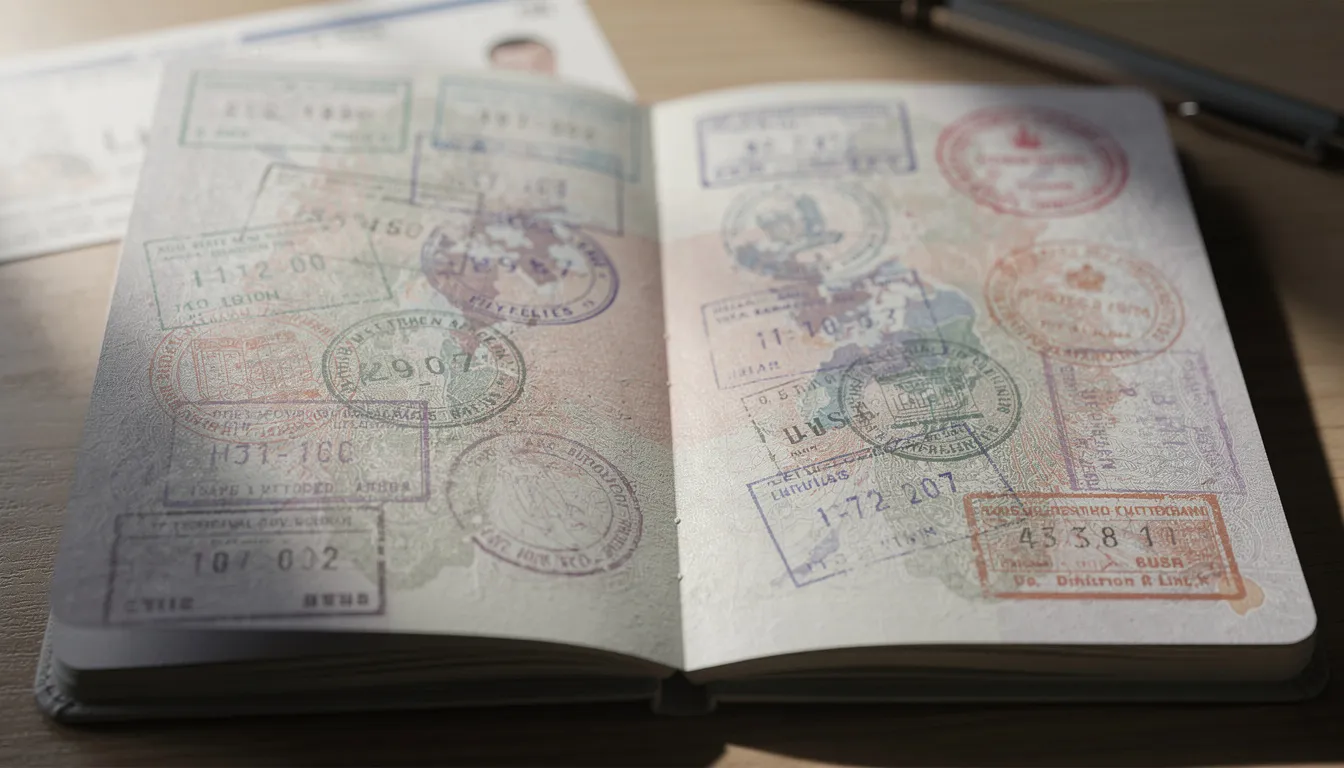
Document Type: When an Apostille Stays Useful (or Not)
Whether an apostilled document will be accepted depends significantly on what kind of document it is and whether its content can change over time. A birth certificate records a historical fact that doesn’t change, while a criminal background check reflects your status at a specific moment.
Even for documents where the content is “permanent”—such as a university degree—the receiving authority might still want a recently issued certified copy with a fresh apostille. Understanding these distinctions can save you from rejected applications and wasted fees.
The following subsections break down common document categories with the time frames typically requested in practice. These are examples based on common requirements, not universal rules.
Vital Records: Birth, Marriage, and Death Certificates
Vital records document historical facts: a birth date, a place of birth, a specific marriage, or a death. These events themselves do not expire or change after they occur.
However, many countries require a “recent” certified copy of these records before they’ll accept an apostille. Common requirements include:
- Birth certificates: Some European immigration offices request copies issued within the last 6 months
- Marriage certificates: Latin American registries often accept up to 12 months
- Death certificates: Generally similar timeframes to other vital records
If a civil status changes after the event—for example, a divorce after marriage—additional documents may be required. But the original marriage certificate itself remains a valid record of that historical event.
Practical advice: If your existing certified copy is more than a year old and you need to use it abroad, order a fresh certified copy from the civil registry or vital records office before having it apostilled. This approach avoids potential rejection for document age.
Academic Records and Diplomas
Academic documents fall into two categories:
- Permanent documents: Diplomas and degree certificates record a completed achievement that doesn’t change
- Time-sensitive documents: Transcripts, enrollment letters, and confirmation of current studies reflect ongoing or recent status
Diplomas with apostilles are often accepted for many years after issuance because the degree you earned remains the degree you earned. Universities and foreign employers, however, frequently request transcripts or enrollment letters no older than 3–6 months.
For example, a university in France might require official transcripts issued within the last 6 months, properly apostilled by the relevant authority, for admission or degree recognition purposes. Some countries also require proof that the issuing institution is currently accredited—not just that it was accredited when you graduated.
If you’re using academic credentials for international purposes, plan to request fresh transcripts close to your application date while potentially using an older apostilled diploma for the degree itself.
Police, Criminal, and Background Checks
Police certificates and criminal background checks are usually among the most time-sensitive documents in any international application.
Common validity requirements include:
- Canadian permanent residence: Checks typically must be issued within 6 months
- Schengen long-stay visas: Usually 3–6 months
- U.S. FBI Identity History Summary: Often must be very recent (30–90 days) for visa or residency applications
When the acceptable age window for a police check passes, the apostille attached to that check effectively becomes unusable. You cannot simply get a new apostille for the old check—you must obtain a completely new background check and then have it apostilled.
This is one area where the difference between legal validity (the apostille never expires) and practical validity (the document must be recent) is most stark. A valid apostille on an outdated FBI check will still result in rejection by immigration authorities.
Business and Corporate Documents
Corporate documents that commonly require apostilles include:
- Certificates of incorporation
- Certificates of good standing
- Powers of attorney
- Board resolutions
- Commercial registry extracts
Foreign registries and banks typically insist on very recent corporate documents. Common timeframes:
Document Type | Typical Age Requirement |
|---|---|
Good standing certificate | 30–90 days |
Registry extracts | 30–90 days |
Powers of attorney | Often 6–12 months |
Certificate of incorporation | Sometimes accepted older |
If a company’s status changes—through dissolution, merger, or being struck off the register—any previously apostilled certificate becomes practically useless for new transactions, even though the apostille itself remains technically valid.
For cross-border company formations, bank account openings, or tender submissions, plan to obtain fresh corporate certifications and arrange for immediate apostille processing. Building in extra time is essential, as state offices like California’s Secretary of State can have processing queues of several weeks.
Country-Specific Validity Expectations
Each country sets its own practice for document age, and even within a country, different ministries or agencies may have distinct rules. There is no global standard beyond the Hague Convention’s silence on the issue.
Comparative examples illustrate this variation:
- Spain: Often accepts civil status documents up to 6–12 months old for residency applications
- Argentina: Immigration services commonly enforce a 6-month recency rule
- Brazil: May require police checks issued within 90 days
- Germany: University admissions might accept transcripts up to 6 months old
Some consulates publish clear age limits on their websites (for example, “documents must be issued and apostilled within the last 90 days”), while others decide on a case-by-case basis or provide no written guidance at all.
If translation is required, that translation may also need to be recent or performed by a sworn or official translator recognized by the destination country. An apostilled document with an outdated translation could still face rejection.
Before submitting any apostilled documents, verify these three questions:
- Is the destination country a Hague Convention member?
- Does the specific authority have a maximum document age rule?
- Are additional steps like translation, notarization, or consular registration needed?
Examples of Typical Time Frames
The following scenarios illustrate typical expectations—these are not universal rules and should be confirmed against current official guidance:
Student visas:
- Transcripts: 3–6 months
- Diploma: Often accepted for several years
- Police check: 3–6 months
Work permits:
- Degree certificates: Variable, sometimes years old accepted
- Professional certifications: 6–12 months
- Background check: 3–6 months
Family reunification:
- Birth certificates: 6–12 months
- Marriage certificates: 6–12 months
- Police checks: 3–6 months
Business registration:
- Certificate of good standing: 30–90 days
- Incorporation documents: Variable
- Powers of attorney: 6–12 months
These examples reflect typical practice around 2023–2025. Always double check current requirements with the specific embassy, consulate, or institution before relying on general guidance.
When You Need a New Apostille
You generally need a new apostille in these situations:
- The original document itself has expired: For example, a power of attorney with a time limit has lapsed
- The receiving authority’s deadline has passed: Your 6-month-old birth certificate doesn’t meet their 90-day requirement
- The underlying official capacity is no longer valid: The notary commission has expired since the original notarization
- The document content has changed: Corporate status has changed, a court judgment has been modified, or civil status has been updated
Common triggers for needing new apostilles include:
- Expired notary commission (though see FAQ below for nuances)
- Corporate status changes (dissolution, merger, name change)
- Updated versions of court documents
- Name changes through marriage or legal process
- Changes in civil status (divorce, remarriage)
You cannot “renew” an existing apostille. The process always requires obtaining a newly issued document (if applicable) and having a fresh apostille attached by the competent authorities.
Practical examples:
- A power of attorney limited to one year has expired—you need a new notarized power of attorney and a new apostille
- Your corporate good standing certificate is 8 months old but the foreign bank requires one issued within 60 days—you need a new certificate and apostille
- Your birth certificate was certified 3 years ago and the consulate wants one from the last 6 months—order a new certified copy and apostille it
Build sufficient time into your planning for both re-issuing documents and obtaining apostilles. Processing can take several weeks depending on the state or federal office involved, and any additional fee for expedited service may be worthwhile to avoid delays.
Planning Ahead for International Procedures
Successful international document procedures require careful planning. Here’s a practical approach:
Step 1: Identify required documents List every document the receiving authority requires. Check their official website or contact them directly.
Step 2: Check age limits For each document, determine the maximum acceptable age. Note these deadlines clearly.
Step 3: Order certified copies Request fresh certified copies from issuing authorities (vital records offices, universities, corporate registries, etc.).
Step 4: Arrange apostilles Contact the appropriate competent authority for each document. In the U.S., this is typically the Secretary of State for state documents or the U.S. Department of State for federal documents.
Step 5: Plan translations If required, arrange for certified or sworn translations. Determine whether the translation itself needs to be apostilled.
Step 6: Align your timeline Work backward from your submission deadline. If you’re applying for a visa in October and documents must be issued within 90 days, don’t order certified copies in June.
Timeline coordination tip: Create a simple spreadsheet tracking:
- Document name
- Issue date requirement (e.g., “within 90 days of submission”)
- Planned order date
- Expected processing time
- Apostille deadline
For complex cases involving multiple countries, dual citizenship, or business expansions across borders, professional guidance can help you avoid costly re-issuance or rejected filings. The mail processing time alone for some state offices can extend to several weeks.
Keep digital scans of all apostilled documents and note their issue dates. Even if a particular apostilled document isn’t accepted for one purpose, it may remain valid for other countries or future international use.

Frequently Asked Questions
Does an apostille remain valid if the notary’s commission has expired?
The apostille certifies the notary’s signature and commission as they existed on the date of notarization. Technically, the apostille itself does not automatically become invalid when the notary commission later expires—the certification was accurate at the time it was issued.
However, some authorities may refuse to accept a document if they see that the original notarization or notary commission is very old. In most cases, obtaining a new notarized document and fresh apostille is more practical than explaining the technical validity of an older one.
Can I add an apostille to a document that is already several years old?
In many jurisdictions, competent authorities will issue apostilles for any official document or certified copy that remains legally valid, regardless of how old it is. A state Secretary of State won’t typically refuse to apostille a 10-year-old birth certificate if it’s still a valid certified copy.
The problem arises at the receiving end. Even if the issuing authority will apostille an old document, foreign consulates or registries may reject it for being too old for their purposes. Getting a recent certified copy is usually the safer approach and helps you avoid delays in your procedure.
Is a separate apostille needed for a translation?
This depends entirely on the destination country’s requirements:
- Option A: Some countries require only the original foreign document to be apostilled. The translation is then done by a sworn or certified translator in the destination country, and no apostille is needed for the translation.
- Option B: Other procedures require the translator’s signature or certification to be notarized, and then that notarization to be apostilled. This effectively creates an apostille for the translation as well.
Always verify whether the receiving authority wants an apostilled translation or will accept a local sworn translation of your apostilled original documents.
Do I need a new apostille if I am reusing the same document for a different country?
An apostille issued by one Hague Convention country is generally valid for use in all other Convention member countries. In principle, the same apostilled document can be reused for multiple purposes or destinations.
However, each country or institution may have its own document age rules. Even if Country A accepted a two-year-old apostilled birth certificate for your visa, Country B might insist on a document issued within the last 6 months. The apostille’s international validity doesn’t override local freshness requirements.
What happens if the country I’m applying to is not in the Hague Apostille Convention?
If your destination country is not a Convention member (such as Canada before 2024, or the UAE), an apostille is not the correct form of legalisation. Instead, documents typically require:
- Authentication by your country’s foreign ministry (e.g., the U.S. Department of State)
- Legalisation by the destination country’s embassy or consulate
This multi-step authentication process can involve an additional fee at each stage and takes longer than obtaining an apostille. Similar age and validity expectations apply to these authenticated documents—consulates often want recent certifications regardless of the authentication method used.
Always check the destination country’s consular website for exact requirements, as the procedure can vary significantly depending on the document type and purpose.
