

Getting your documents ready for international use can feel like navigating a maze of bureaucratic requirements. Whether you’re adopting a child from abroad, accepting a job overseas, or registering a business in another country, you’ve likely encountered the term “apostilled.” If you need information on obtaining your birth certificate in Austin, TX, check out this complete guide.
Understanding the definition of apostilled documents is essential for anyone dealing with cross-border paperwork. This guide breaks down exactly what it means, when you need one, and how the process works—so you can move forward with confidence.
Key Takeaways
- A document is “apostilled” when it has been issued an official authentication certificate under the 1961 Hague Convention, certifying the authenticity of the signature, seal, or stamp of a public official such as a notary public or state registrar. For example, a birth certificate is often apostilled for official use abroad.
- An apostille does not validate the content or truthfulness of a document—it only confirms that the official who signed or sealed it was authorized to do so.
- You only need a document apostilled when it will be used in another country that is a member of the Hague Convention of 5 October 1961; otherwise, the correct process is “authentication” or “legalization.”
- Apostilles are issued by competent authorities (for example, the secretary of state in U.S. states or the Foreign, Commonwealth & Development Office in the UK) and never by the notary themselves.
- If the destination country is not a Hague member, documents require multi-step authentication through embassy or consular legalization instead.
What Does “Apostilled” Mean?
A document is “apostilled” when an official apostille certificate has been attached or stamped to it by the designated government authority. This certificate serves as an international seal of approval, confirming that the document bears genuine signatures and official certificates from authorized persons.
The apostille itself is a standardized authentication certificate created by the Hague Convention of 5 October 1961. It follows a specific format with required fields including:
- Country of issue
- Name of the person who signed the original document
- Capacity or title of the signing official
- Name of the authority whose seal or stamp the document bears
- City and date of issuance
- Issuing authority name
- Unique reference number
- Signature and seal of the issuing authority
An apostilled document can be recognized in all other Hague Convention countries without further consular legalization, making cross-border use faster and simpler.
Here’s a concrete example: A U.S. power of attorney notarized in California and apostilled by the California Secretary of State in 2024 can be submitted directly to a Spanish bank or court. The receiving country—Spain, in this case—will accept the apostille as proof that the notary’s signature is genuine, without requiring additional embassy verification.
This streamlined approach replaced what was historically a multi-layered process involving local notaries, county clerks, state officials, the U.S. Department of State, and finally the foreign embassy or consulate of the destination country. For those navigating this process, utilizing reliable apostille translation services can further simplify document legalization for international use.
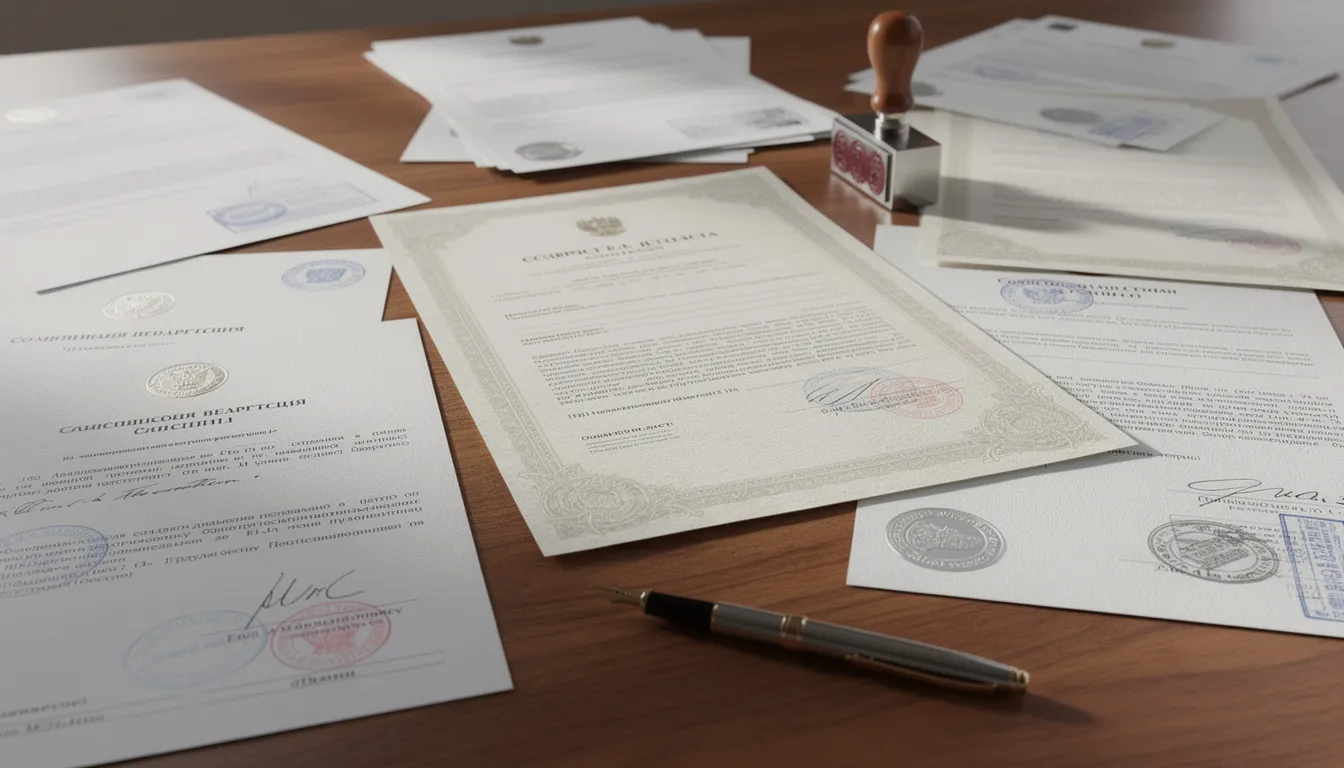
Legal Background: The Hague Apostille Convention
The Hague Convention of 5 October 1961 Abolishing the Requirement of Legalisation for Foreign Public Documents—commonly called the “Apostille Convention”—was adopted in The Hague, Netherlands, by the Hague Conference on Private International Law. It entered into force in 1965.
Before 1961, getting a document accepted abroad was an ordeal. A typical process looked like this:
- Notarization by a local notary public
- Certification by county clerks
- State-level verification by the secretary of state’s office
- Authentication by the U.S. Department of State
- Final legalization by the foreign embassy or consulate
This chain of verifications often took weeks or months and incurred significant costs. The Hague Convention abolished the requirement for embassy legalization between member countries, reducing the entire process to a single apostille step.
As of the mid-2020s, over 120 jurisdictions participate in the Convention, including:
- United States
- Most European Union countries
- Australia
- Mexico
- Japan
- United Kingdom
- Canada (joined recently for certain document types)
The Convention applies specifically to foreign public documents, which include:
- Notarial acts and documents signed by a notary
- Court and tribunal documents
- Vital records (birth, marriage, death certificates)
- Administrative documents issued by public authorities
- Official certificates placed on private documents (such as notary attestations)
Always check the current list of member countries on the official Hague Conference website before assuming your document can be apostilled for a particular destination.
Apostilled vs. Authenticated vs. Legalized
Understanding the difference between these three terms can save you significant time and prevent document rejection. Each describes a different method of cross-border document validation, and using the wrong process is a common—and costly—mistake.
Apostilled refers to the streamlined process used when the destination country is a member of the 1961 Hague Convention. One apostille certificate from the competent authority in the document’s country of origin is usually enough. No embassy involvement is required.
Authenticated (sometimes called “certified for foreign use”) describes the process typically used when the destination country is not a Hague member. Authentication usually involves verification by a state or national authority, such as the secretary of state or the U.S. Department of State, but requires additional steps afterward.
Legalized refers to the traditional multi-step procedure where a foreign consulate or embassy confirms the state or national authentication. This is the final step required for non-Hague countries.
| Term | When It Applies | Steps Required | Embassy Needed? |
| Apostilled | Hague Convention member countries | Single certification | No |
| Authenticated | Non-Hague countries (first step) | State + federal certification | Yes (next step) |
| Legalized | Non-Hague countries (final step) | Embassy/consulate verification | Yes |
Important distinction: If you apostille a document for a non-Hague country like Canada (for documents not covered under Canada’s recent Hague participation), the receiving country will likely reject it. You would need to obtain a fresh certified copy and follow the full authentication and legalization chain instead.
When a Document Needs to Be Apostilled
A document needs to be apostilled when an authority abroad—such as a court, university, employer, civil registry, or immigration office—in a Hague member country demands proof that the document is genuine.
The deciding factor is always the destination country, not where the document was issued. If the receiving country is in the Hague system, an apostille is the correct approach.
Common document types that frequently require apostilles:
Vital records and civil status documents:
- Birth certificate (from state registrar or vital records office)
- Marriage certificate
- Death certificate
- Divorce decree
Legal and notarial documents:
- Powers of attorney (notarized document with notary’s signature)
- Affidavits and sworn statements
- Court judgments and orders
- Probate documents
Educational credentials:
- University diplomas and transcripts
- High school diplomas
- Professional certifications
Corporate and commercial documents:
- Certificates of incorporation
- Articles of organization and bylaws
- Board resolutions
- Commercial invoices
- Deeds of assignment
Practical examples:
A California birth certificate apostilled in 2025 for a marriage registration in Italy would follow this path: obtain a certified copy from California’s vital records agency, submit it to the California Secretary of State for apostille, then present the apostilled document to Italian authorities.
A Texas university diploma apostilled for a work visa application in the Netherlands would require the diploma (or a notarized true copy) to be apostilled by the Texas Secretary of State before submission to Dutch immigration.

Who Issues an Apostille and What Is the Notary’s Role?
One of the most common misconceptions is that a notary public can issue apostilles. They cannot.
The competent authority issues the apostille
The apostille must come from a government-designated “competent authority” in the country where the document originates. In the United States, this varies depending on the document type:
| Document Type | Competent Authority |
| State and federal documents notarized by state-commissioned notaries | Secretary of State’s office in the state where the notary is commissioned |
| Federal documents signed by federal officials | U.S. Department of State, Office of Authentications |
| Documents signed by U.S. consular officers | U.S. Department of State |
| Court documents | Federal court clerks (for federal) or state authorities (for state courts) |
In other countries, the competent authority is typically the ministry of foreign affairs or an equivalent department.
The notary’s responsibilities
A notary public performs the underlying notarization, which may later be apostilled. Their role includes:
- Correctly identifying the signer through proper identification
- Administering any required oath or acknowledgment
- Completing the notarial certificate with accurate information
- Affixing their seal so the government can later verify the same notary is properly commissioned
For authentication and apostille services, additional steps may be required to ensure your documents are recognized abroad.
The document requires the notary’s work to be complete and valid before an apostille can be attached. An apostille cannot “fix” a defective notarization.
Apostille handling services
Some notaries or private agencies offer paid “apostille courier” or “apostille handling” services where they submit and retrieve documents on the customer’s behalf. This is purely an administrative convenience—not a notarial act. The apostille itself is still issued by the competent government authority.
How a Document Becomes Apostilled: Typical Steps
Understanding the process from start to finish helps you avoid delays and rejections. Here’s the typical workflow:
Step 1: Preparation
Before anything else, determine what the receiving country requires. Some authorities abroad demand:
- Original documents only
- Certified copy from the issuing agency
- Recent issue dates (often within 3-12 months)
- Specific formats or translations
For vital records like a birth certificate, you’ll typically need to obtain a certified copy from the state registrar or vital records office. Documents originating from court proceedings, or those required as part of an FBI background check, may require certified copies from the clerk of court.
Step 2: Notarization (if applicable)
Certain documents must be notarized before they can be apostilled. This applies to:
- Powers of attorney
- Affidavits and declarations
- Corporate resolutions
- Any private document that needs official certification
The notarization must be performed by a notary public commissioned in the state where you’ll submit for apostille. The notary will verify the identity of the person signing, witness the signature, and complete the notarial certificate.
Step 3: Submission to the competent authority
Submit your document to the correct office. For most U.S. state-issued or state-notarized documents, this means the secretary of state’s office in the state where:
- The vital record was issued, or
- The notary public is commissioned
You can typically submit by:
- Mail (include return postage and proper fees)
- In-person walk-in or scheduled appointment
- Through a process server or courier service
Current U.S. Department of State fees: $20 per document for federal apostilles, though state fees vary. Many states accept money orders, credit cards, or checks.
Step 4: Issuance and attachment
The competent authority reviews the document, verifies the official’s signature and seal on file, and issues the apostille. The apostille page may be:
- A separate sheet attached to the original document
- A stamp applied directly to the document
- A cover sheet affixed with adhesive
Processing times vary by office—anywhere from same-day service to several weeks during busy periods.
Step 5: Translation (if required)
Many receiving countries require translated documents in addition to the apostille. The translation itself may also need to be notarized and potentially apostilled. Consult with the foreign authority to confirm requirements before submission.

Limitations and Common Misunderstandings About Apostilled Documents
An apostille is a powerful tool for international document acceptance, but it has specific limitations that catch many people off guard.
What an apostille does NOT do:
It doesn’t validate content. An apostille only certifies the authenticity of the signature, seal, or authority of the public official who signed the document. It makes no statement about whether the information in the document is true, accurate, or lawful.
It doesn’t make documents universally valid. An apostilled document is streamlined only among Hague Convention member countries. Presenting an apostilled document to authorities in a non-member country will likely result in rejection.
It doesn’t substitute for other legal requirements. Apostilles don’t replace:
- Visa or immigration requirements
- Residency permits
- Academic equivalency evaluations
- Professional license recognitions
Common mistakes to avoid:
| Mistake | Reality |
| Thinking any notary can issue apostilles | Only government competent authorities issue apostilles |
| Assuming all countries accept apostilles | Only Hague Convention members accept them |
| Believing an apostille “validates” document contents | It only verifies the official’s authority |
| Submitting to the wrong state’s office | Submit where the notary is commissioned, not where you live |
| Expecting apostilles to fix incomplete documents | The original document must be complete and properly executed first |
Important documents still need to meet substance requirements. A foreign university may still require that your apostilled transcript come with a certified translation. A court may still demand that your apostilled birth certificate be issued within the last six months. The apostille handles authentication—everything else is separate.
FAQ – Definition and Use of Apostilled Documents
Does an apostille expire?
The apostille certificate itself typically does not have a formal expiration date. However, foreign authorities often require that the underlying document be recent. For example, many countries demand that a criminal background check or single status affidavit be issued within the last 3-6 months, and birth certificates may need to be issued within 12 months. Always verify the receiving country’s specific requirements before obtaining your apostille.
Can I apostille a photocopy or scan?
Generally, you cannot apostille a plain photocopy. However, many authorities accept apostilled notarized copies—where a notary public certifies a copy as a true copy of the original document, and that notarial act is then apostilled. Some authorities require the original certified document from the issuing agency. Confirm with the foreign authority first to avoid rejection.
Can I get a document apostilled if the destination country is not part of the Hague Convention?
No. If the receiving country is not a Hague member, the document is not “apostilled” but instead must be “authenticated” by state and federal authorities and then “legalized” by the foreign embassy or consulate. This multi-step process takes longer and costs more, but it’s the only valid option for non-member countries.
Is an apostille the same as a notarization?
No. Notarization is performed by a notary public to verify a signature, administer an oath, or certify a copy. An apostille is issued later by a government office (like the secretary of state) to confirm the notary’s or official’s authority for international use. Notarization often comes first; apostille follows.
Can I choose where to apostille my document?
No. Apostilles must be issued in the country where the document originates, and typically by the jurisdiction that commissioned the signing official. A French birth certificate can only be apostilled by French authorities. A document notarized by a Texas notary must be apostilled by the Texas Secretary of State—not California’s or any other state’s office.
