

Key Takeaways
- A notary public cannot issue an apostille—only government offices like the Secretary of State or U.S. Department of State have that authority. However, the notary must properly notarize documents before an apostille can be attached.
- Apostilles are used when documents such as powers of attorney, original diplomas, or birth certificates need legal recognition in Hague Apostille Convention countries like France, Mexico, Japan, and Australia.
- The signer, not the notary, is responsible for submitting the apostille request to the competent authority after notarization is complete.
- Errors in notarization—such as a missing notary stamp, incorrect notarial certificate wording, or an expired notary’s commission—can result in costly rejections and delays.
- Some notaries offer paid apostille courier or facilitation services, but these are not notarial acts and are regulated differently from the notarization itself.
What Is an Apostille and Why Notaries Matter
An apostille is an official certificate issued by a government agency that authenticates a notary’s signature and seal—or the signature of another public official—so the document can be legally recognized in a foreign country. Think of it as an international stamp of approval that tells foreign authorities, “Yes, this notarial act is legitimate.”
Apostilles are recognized only between countries that have signed the 1961 Hague Convention Abolishing the Requirement of Legalization for Foreign Public Documents. As of recent data, 123 countries are parties to this treaty, covering over 90% of global international document traffic. Member nations include France, Italy, Mexico, Japan, the Netherlands, Australia, Spain, and Germany, among many others.
Here’s an important distinction: the apostille does not validate the content of your document. It doesn’t verify that the information in your power of attorney is accurate or that your school transcripts are genuine. What the apostille certifies is the authenticity of the signature, the official capacity of the person who signed, and any seal or stamp on the document.
The typical flow works like this: your document gets signed and notarized in the United States, then you submit it to your state’s Secretary of State’s office for the apostille, and finally you send the apostilled document to the receiving country. This process replaces the old, cumbersome chain of authentication that existed before 1961.
Some U.S. states—including Minnesota, California, and Texas—offer public online tools to verify apostilles using a unique file or reference number. This allows foreign authorities to confirm the apostille’s authenticity without additional steps.
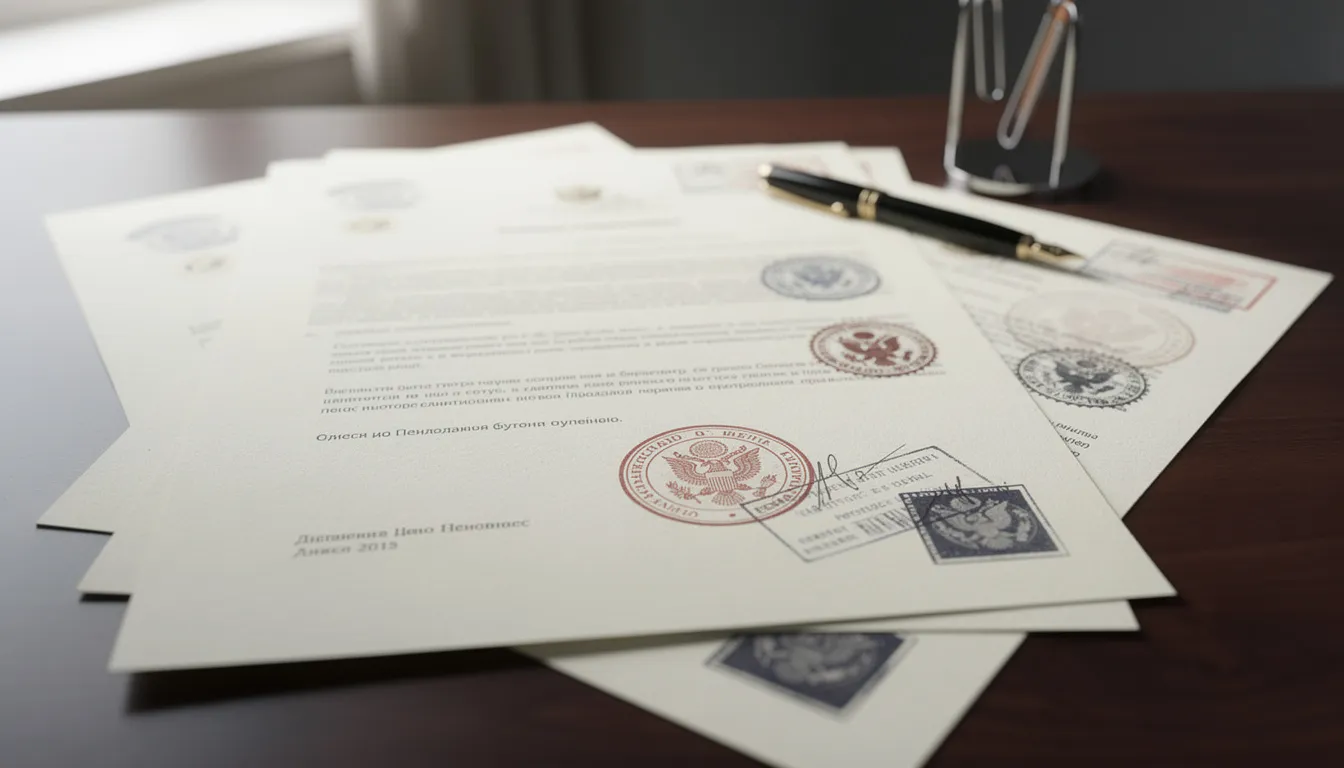
Apostille vs. Authentication vs. Consular Legalization
Different certifications apply depending on whether the destination country participates in the Hague Convention. Understanding which process you need can save you weeks of delays and significant costs.
Apostille is the simplified certification used between Hague Convention member countries since 1961. It’s issued by a “competent authority”—in the U.S., this is typically a state Secretary of State for state-level documents or the U.S. Department of State for federal documents. One document, one apostille, one government office. That’s the beauty of the system.
Authentication certificates (sometimes called “certificates of authority”) are used when your document is heading to a country that has not joined the Hague Convention. This process involves more steps and more offices. You may need certification from the county clerk, then the state’s Secretary of State, followed by the U.S. Department of State in Washington, D.C., and finally legalization at the destination country’s embassy or consulate.
Here’s a concrete example: If you need to send a notarized power of attorney to Spain (a Hague member), you’ll likely need only a state apostille after notarization. But if that same document requires authentication verifying its legitimacy for use in China or the United Arab Emirates (non-Hague countries), you’re looking at multiple authentication steps plus consular legalization.
Comparing the two paths:
When your document is destined for a Hague Convention country, the process typically involves notarization followed by submission to your state’s SOS office for the apostille. Processing times range from a few days to a couple of weeks, and fees are generally modest—California Secretary of State charges $20 per apostille plus $6 per special handling fee, while New York charges $10 per document.
When your document is going to a non-Hague country, expect notarization, county clerk certification (in some states), state authentication, U.S. Department of State authentication, and finally legalization at the foreign embassy or consulate. This can take months and cost significantly more due to multiple agency fees and potential courier service expenses.
What a Notary Can and Cannot Do in the Apostille Process
A notary public’s authority is strictly limited to performing the notarization. Only government offices such as a state Secretary of State or the U.S. Department of State can issue an apostille. No U.S. notary—regardless of experience or credentials—has the power to attach that official certificate to your document.
When a document is intended for apostille, the notary’s core duties include:
- Verifying the signer’s identity using acceptable identification (driver’s license, passport, or state-approved ID)
- Confirming the signer is willing and aware of what they’re signing
- Administering an oath or taking an acknowledgment where required by the document type
- Completing the notarial certificate with correct, state-compliant wording
- Signing and placing a clear, legible notary stamp or seal
The notary is not legally responsible for determining whether an apostille or full legalization is needed for your situation. That responsibility falls on you, the signer, or the organization requiring the document. Similarly, contacting foreign consulates or researching destination country requirements is outside the notary’s scope.
State law dictates acceptable certificate wording. For example, states have specific statutes governing acknowledgment and jurat forms (similar to Minnesota’s MS 358.65 or equivalent statutes in other states). Using incorrect wording or a non-compliant format can result in rejection.
If the notarization is defective—missing venue information, no date, illegible seal, or showing an expired commission date—the Secretary of State will refuse to issue the apostille. This creates delays, requires the document to be re-notarized, and can lead to enforcement actions against the notary if the error reflects negligence or misconduct.
Common Documents That Need a Notary for Apostille
Many personal documents, academic records, and business paperwork must be properly notarized before they can receive an apostille. Understanding which documents originating from your activities require this step helps you plan accordingly.
Personal and legal documents commonly requiring notarization for apostille:
- Powers of attorney used for property transactions in Mexico, Spain, Italy, or other countries
- Adoption dossiers and court documents for international adoption cases
- Affidavits, sworn statements, and declarations for immigration or legal proceedings
- Divorce decrees and related court documents when not issued as certified copies by a court clerk
- Translated document certifications where a translator swears to the accuracy of their work
Academic and professional documents:
- School transcripts from high schools, colleges, and universities
- Original diplomas or diploma copies certified by the university registrar
- Professional licenses and certifications requiring foreign recognition
- Letters of recommendation or employment verification letters
Business and corporate documents:
- Articles of incorporation and business resolutions
- Corporate bylaws and operating agreements
- Certificates of good standing (though some are issued directly by the state)
- Contracts and agreements for international transactions
Some official records don’t require notarization by an individual because they’re issued as certified copies directly by a government agency. For example, state-issued birth and death certificates, marriage certificates, and marriage licenses typically go straight to apostille without additional notarization. Vital records offices issue these as an official certified copy with their own seal.
When submitting copies of passports, driver’s licenses, or IDs for foreign use, these are often notarized as “true copies” before being sent for apostille. Never mail your original document or original ID unless a government office explicitly requires it—and even then, verify this requirement independently.
Federal documents such as FBI background checks follow a different path. These are authenticated or apostilled by the U.S. Department of State, not by a state office. The FBI or issuing agency certification must be in place first, and then the package goes to Washington, D.C. for processing.
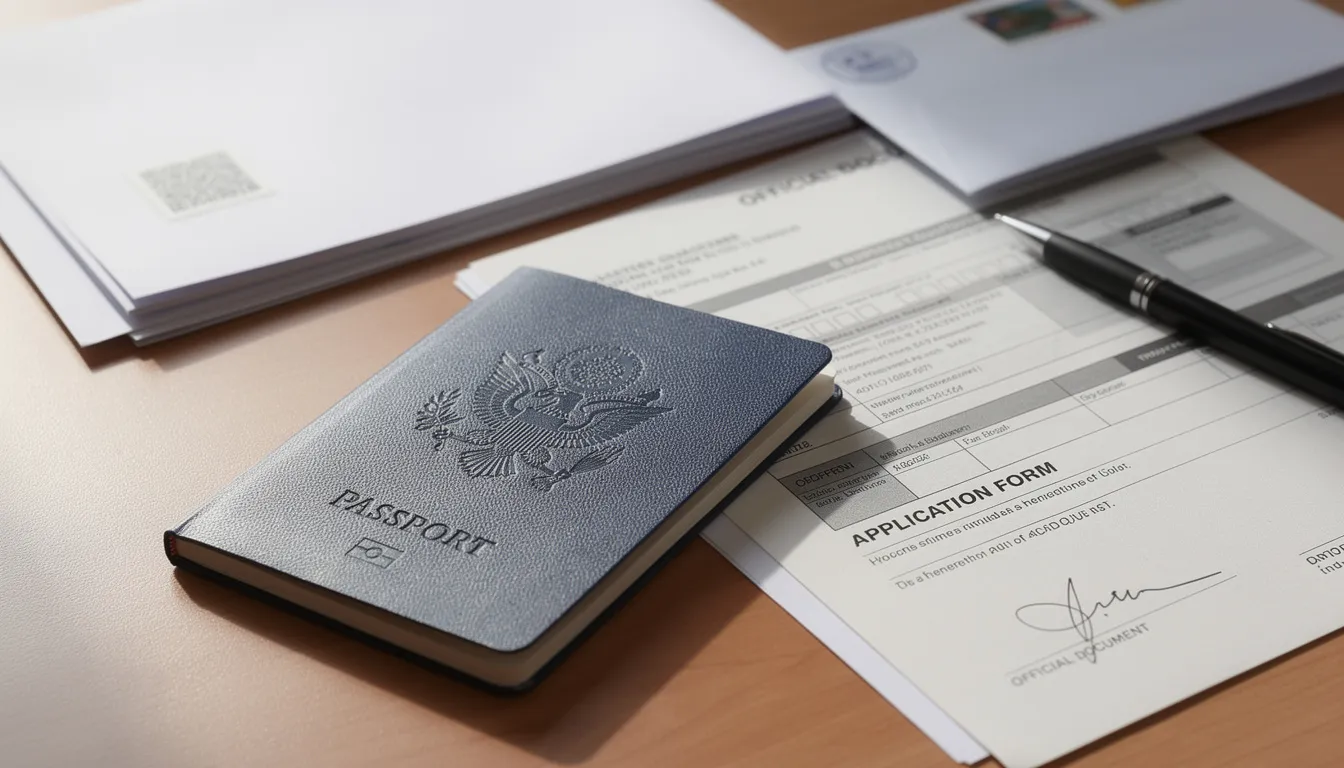
Step-by-Step: How to Use a Notary When You Need an Apostille
The journey from notarization to receiving your apostilled document back follows a predictable path. Here’s how to navigate it.
Step 1: Identify your destination country’s requirements
Before anything else, determine whether your receiving country is part of the Hague Apostille Convention. You can check the current member list on the Hague Conference website or contact the destination country’s embassy or consulate. This single piece of information dictates your entire process.
Step 2: Confirm what the foreign authority requires
Reach out to the receiving authority abroad—whether that’s a foreign university, court, registry office, or government agency—and get specific instructions on what they need. Do they require original documents or notarized copies? Is a certified copy of your birth certificate sufficient? Do they need a translated document with the translation notarized? Get this in writing if possible.
Step 3: Get your document notarized properly
Meet with a commissioned notary public in the state where the document originates. A Minnesota notary for Minnesota records, a Texas notary for Texas school records, and so on. Bring valid identification, understand what you’re signing, and ensure the notary completes a proper notarial certificate with correct wording, signature, and notary seal.
Step 4: Submit to the appropriate Secretary of State
Package your notarized document with any required apostille request forms, cover sheet, and the required fee. Include a self-addressed, prepaid return envelope for the completed apostille. The Texas Secretary of State, for example, advises allowing roughly 10 business days for processing mailed requests. The California Secretary of State handles high volumes with similar timeframes.
For tracking purposes, consider using United States Postal Service certified mail or a mail tracking service to confirm delivery. Keep copies of everything you send.
Step 5: Handle additional steps for non-Hague countries
If your document is going to a non-Hague country, you’re not done after the state step. The document typically needs to go to the U.S. Department of State Authentications Office in Washington, D.C., and then to the destination country’s embassy or consulate for legalization. This adds several weeks (sometimes months) to your timeline and increases costs substantially.
Always track your processing status, maintain copies of all submitted materials, and verify any online tracking or file-number lookup options your state offers.
Can Notaries Offer Apostille Services or Act as Couriers?
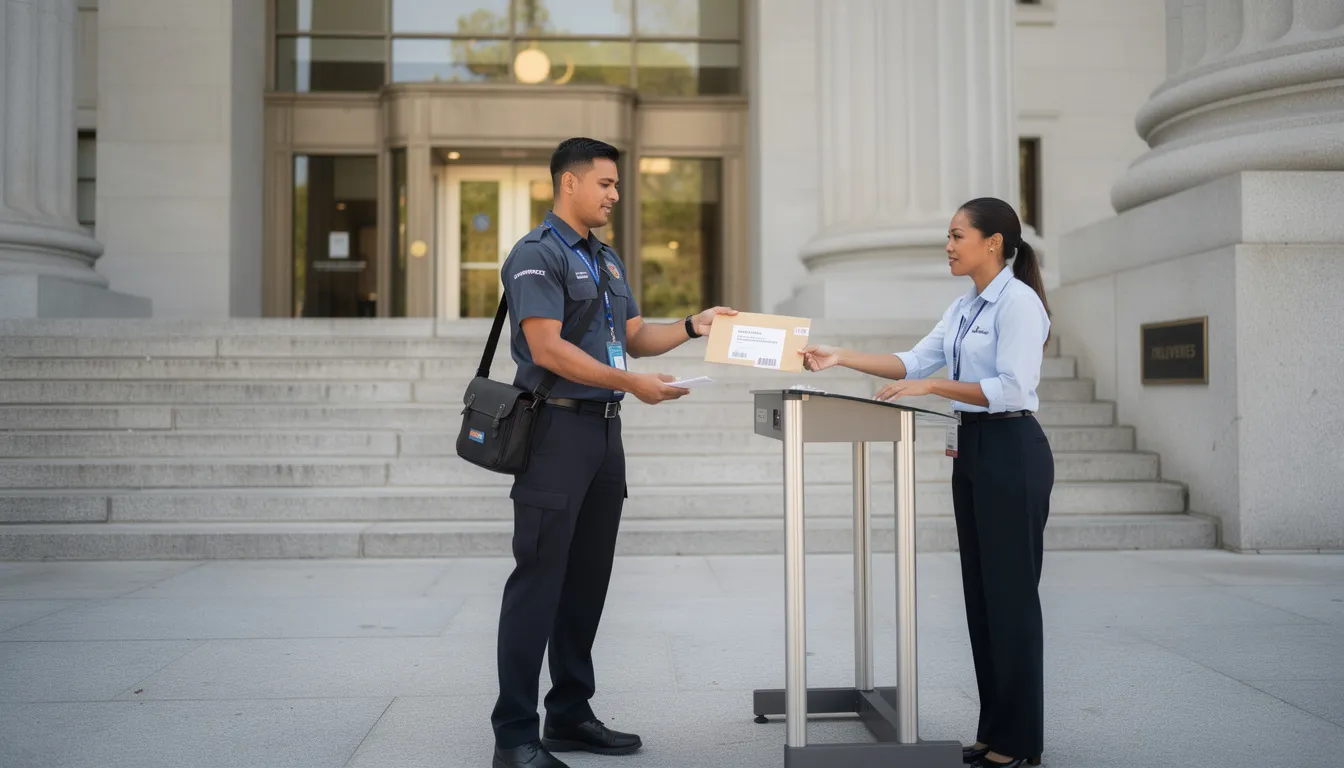
While notaries cannot issue apostilles, many offer paid “apostille facilitation” or courier service to help clients handle the paperwork and physical delivery to government offices. This can be a way for notaries to generate additional income beyond standard notarization fees.
These apostille services typically include:
- Reviewing the document to confirm it appears properly notarized
- Assembling the required state request forms and cover sheet
- Delivering documents in person to a Secretary of State office when same-day or expedited service is available
- Picking up completed apostilled documents and returning them to the client
- Coordinating with the U.S. Department of State for federal documents or non-Hague legalization chains
These courier or facilitation services are not notarial acts. They don’t fall under the same regulated fee schedules that govern notarization in most states. Pricing is typically market-based, and notaries should disclose their fees clearly in advance—separate from any official government fees.
Using a professional apostille service or notary courier can save significant time for urgent matters like immigration deadlines, work visa applications, or international real estate closings where timing is critical. However, you always have the option to submit your important documents directly to the Secretary of State’s office on your own.
State law and professional guidelines may restrict how notaries advertise these services. Notaries must also avoid giving legal advice about which type of certification or legalization is required—that crosses into territory reserved for licensed attorneys.
Best Practices for Notarizations Intended for Apostille
Documents destined for foreign use face heightened scrutiny. Both the Secretary of State reviewing them and foreign authorities receiving them expect precision. A small error that might pass for domestic use can derail an international transaction.
Use complete, state-compliant certificate wording. Don’t improvise or use generic templates from the internet. Your state has specific statutory requirements for acknowledgment and jurat certificates. Use them exactly.
Avoid alterations that raise red flags. Cross-outs, blank spaces, white-out corrections, and handwritten additions can cause a Secretary of State to reject the document. If errors occur during the notarial act, it’s often better to start fresh with a clean document.
Ensure your notary seal meets state requirements. The seal must be clear and legible, especially since documents may be scanned, copied, or photographed multiple times as they move through different countries. Most states require the seal to include the notary’s name, the words “Notary Public,” the state name, and the commission expiration date.
Maintain detailed journal entries. Record the document type, date, signer’s identification, and note that the document was “for apostille / international use” if your state permits such annotations. This documentation can resolve disputes or questions that arise months later.
Confirm whether wet-ink notarization is required. Some states, including Minnesota’s apostille office, explicitly do not accept remote, electronic, or online notarizations for apostille purposes. Before proceeding with a remote online notarization (RON), verify that your state’s Secretary of State will accept it for the apostille you need.
Frequently Asked Questions
Can a notary in my state directly issue an apostille for my document?
No. No U.S. notary—whether in Texas, Minnesota, California, New York, or any other state—can issue an apostille. Only designated government offices have that authority. For state-level documents, this is typically the state Secretary of State. For federal documents issued by agencies like the FBI, it’s the U.S. Department of State Authentications Office in Washington, D.C. The notary’s role ends once the notarial act is complete; obtaining an apostille is a separate government function.
Do I always need notarization before getting an apostille?
Not always. Many documents—such as publicly recordable document types like personal affidavits, powers of attorney, or translated documents—must be notarized first. However, some records are issued directly by government agencies as certified copies with official seals. State-issued birth and death certificates, marriage licenses, and court-certified documents often go directly to apostille without additional notarization. The key is whether the document already bears an official government seal and authorized signature.
Can I get an apostille in a different state from where the document was created?
No. Apostilles are issued only by the jurisdiction where the document originated or was notarized. A Minnesota birth certificate must receive its apostille from Minnesota’s Secretary of State, not from Texas or California. Similarly, if a notary in New York notarized your document, that document goes to New York for the apostille. Submitting to the wrong state will result in rejection, so always match the document to the address listed for the correct state’s office.
How long does the apostille process usually take after notarization?
Processing times vary by state and submission method. Mailed apostille requests commonly require 7–10 business days of processing time, plus mailing time in both directions. In-person submissions, where available, may offer same-day or next-day service. The U.S. Department of State for federal documents can take 4–6 weeks or longer by mail. During peak periods or when dealing with other countries’ consulates for full legalization, expect additional delays. Always check your state’s current processing estimates before planning around deadlines.
What if the country where I’m sending my documents is not in the Hague Apostille Convention?
If the destination country isn’t a Hague member—such as Canada, China, Saudi Arabia, or the United Arab Emirates—you’ll need to go through the full legalization process instead of obtaining an apostille. This typically involves state authentication, then U.S. Department of State certification, and finally legalization at the destination country’s embassy or consulate. The process takes longer, costs more, and requires navigating each consulate’s specific instructions and fee structures. Check the Hague Conference website to confirm your destination country’s status before proceeding.
