

Key Takeaways
- Certified copies of U.S. birth certificates are issued only by government vital records offices in the state, territory, or federal agency where the birth was recorded. There is no single federal office that handles all requests—each jurisdiction manages its own records.
- Fastest ways to order your birth certificate:
- Online through an authorized vendor like VitalChek or your state’s official portal
- In person at a local vital records office or county health department
- By mail with a completed application form, payment, and ID copies
- You will need specific details (full name at birth, date of birth, place of birth, parents’ names) plus valid ID, and usually a fee ranging between about $15–$35 per copy depending on the state.
- U.S. citizens born abroad, adoptees, and people who have lost all IDs follow slightly different processes, covered in separate sections below.
- Always use official .gov websites or clearly authorized partners and avoid third-party sites that overcharge or cannot provide certified copies.
How to Get a Copy of Your U.S. Birth Certificate (Step-by-Step)
This section gives you a quick, actionable guide so you can start the process immediately. Whether you need a certified birth certificate for a passport application, a new job, or a Real ID driver’s license, these steps apply across most U.S. states.
- Confirm where your birth record is kept. Contact the vital records office in the state or U.S. territory where you were born. For example, California uses the Department of Public Health, Texas has its Vital Statistics Unit, and Florida operates through the Bureau of Vital Statistics. Your birth certificate is not stored federally—it lives with the state where the birth occurred.
- Visit the official website. Go to that office’s .gov URL and search for “Birth Certificate” or “Vital Records” to find the correct ordering page. Bookmark this page to avoid accidentally landing on unofficial sites that charge extra fees.
- Choose your ordering method. Most states offer three options:
- Online: Order through the state’s portal or an authorized vendor like VitalChek
- By mail: Download the application form, complete it, and submit with required documents
- In person: Visit a county vital records office or health department counter
- Gather your information. Have these details ready before you begin:
- Full name at birth (including any maiden name)
- Date of birth
- City, county, and state of birth
- Sex at birth
- Full names of parents (including mother’s maiden name and father’s name)
- Your current mailing address
- Prepare for fees. Most states charge a non-refundable fee per certified copy, often between $15 and $30. Online orders may include additional service fees, credit card processing charges, or expedited service options for faster delivery.
- Understand timelines. Standard processing ranges from a few business days to several weeks depending on the state and method. Online and in person requests are typically faster than mail orders, which can take 4–6 weeks or longer during peak periods.

Ordering a Birth Certificate If You Were Born in a U.S. State or Territory
This section applies if you were born in any of the 50 states, the District of Columbia, or U.S. territories like Puerto Rico, Guam, U.S. Virgin Islands, American Samoa, or the Northern Mariana Islands.
- Vital records are managed at the state or territory level. The New York State Department of Health, Pennsylvania Department of Health, and Puerto Rico Demographic Registry each handle their own records. No single federal government agency issues birth certificates for domestic births.
- Each jurisdiction sets its own eligibility rules. Generally, the person named on the record, parents listed on the document, legal guardians, and certain close relatives (spouse, adult child, sibling, or grandchild) can request a certified copy. An attorney with proper documentation may also submit a request on behalf of a client.
- State-specific examples show how processes vary:
- In California, certified copies are limited to people with a direct relationship. Mail orders require a notarized sworn statement, and the form allows foreign notarization for applicants abroad.
- In Texas, you can use a statewide remote birth certificate system at many local offices, making in person pickup more accessible across the state.
- In New York State, you must specify whether you want a “long form” that includes parents’ names or a short form with limited details.
- In Louisiana, the state maintains closed records, meaning only entitled parties can obtain certified copies. Lafayette Parish charges $34 for walk-in service.
- Most jurisdictions allow orders through multiple channels:
- Online portal or authorized vendor (VitalChek partners with over 450 government agencies nationwide)
- Mail with a signed application, copy of ID, and payment via money order or credit card
- In person at a county vital records office, clerk’s office, or local health department
- Verify you’re ordering the right type of document. A certified copy includes security features like a raised seal and official signature—this is what you need for passports, Real ID driver’s licenses, or immigration applications. An informational copy is clearly marked “Not Valid for Identification” and serves only genealogical or personal reference purposes.
Records from before computerization (pre-1960s in some states) may take longer to process while staff locate older paper or microfilm archives.
U.S. Citizens Born Abroad: How to Get Your Birth Record
U.S. citizens born outside the United States are documented by federal records rather than state vital records offices. Your primary document is typically a Consular Report of Birth Abroad or a Certificate of Birth issued by the Department of State.
- Consular Report of Birth Abroad (CRBA) is the official document for U.S. citizens born in foreign countries. Parents normally receive Form FS-240 when they report a child’s birth at a U.S. embassy or consulate. This document serves as proof of U.S. citizenship and functions like a domestic birth certificate.
- Replacement copies are ordered through the U.S. Department of State. Submit Form DS-5542 along with the required fee and supporting documents. You can complete this process from inside or outside the United States.
- Adults who never had a CRBA issued may rely on a U.S. passport, naturalization certificate, or other documents as primary citizenship evidence. For complex cases involving parentage or citizenship claims, consult official USAGov or Department of State guidance.
- Federal birth documents work like state birth certificates for most purposes: applying for a passport, proving citizenship to an employer, or handling immigration paperwork.
- Plan ahead for processing times. CRBA replacement requests can take several weeks or longer, so submit your request well before any passport or visa application deadlines.
What You Need: IDs, Proof, and Eligibility
Vital records offices must protect sensitive data, so they require proof of identity and, in many cases, proof of relationship or legal interest before issuing a certified copy. Here’s what you should prepare.
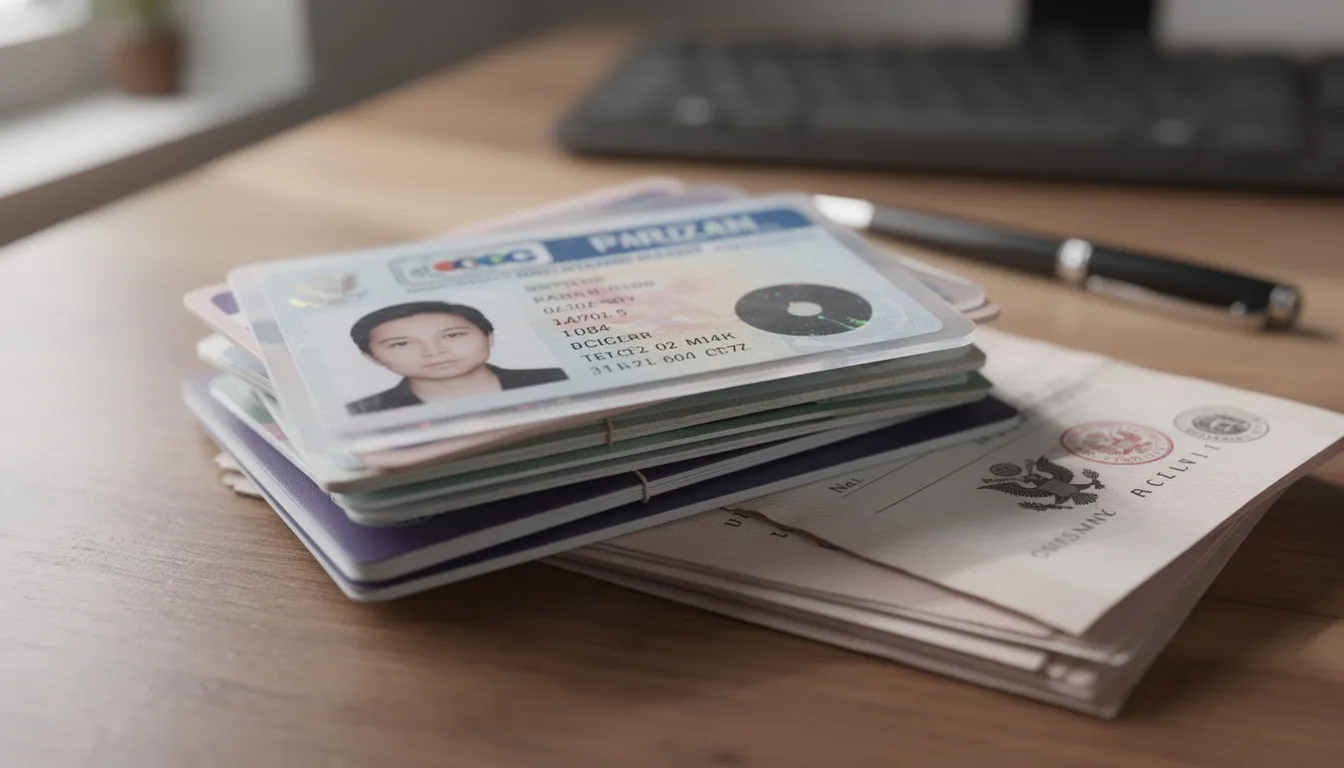
- Acceptable primary IDs include:
- Unexpired U.S. driver’s license or state ID card
- U.S. passport
- U.S. military ID
- Permanent resident card (green card)
- Naturalization certificate
- Some states accept foreign passports if accompanied by proof of U.S. residency
- Mail applications typically require: A photocopy of the front and back of your ID. If you cannot provide a photocopy, some states accept a notarized signature or a sworn statement of identity to prevent fraud.
- Proof of relationship rules apply for third-party requests. Parents named on the record, legal guardians (with court order documentation), or close relatives like a spouse, adult child, or sibling may need to show marriage certificates, guardianship letters, or a death certificate when requesting records on behalf of another person.
- Informational vs. certified copies access differs. Some states allow anyone to order informational copies with limited data, clearly marked “Not for Identification.” Access to certified copies with the raised seal is restricted to eligible people only.
Eligibility requirements and accepted IDs can change. Always verify the current list directly on the official state or territorial vital records website before submitting your request.
Costs, Processing Times, and Delivery Options
Fees and timelines vary by jurisdiction. This section gives you a realistic expectation of what most people will pay and how long they will wait.
- Base fees range from about $10 to $35 per certified copy. For example:
- Pennsylvania charges a set state fee for each copy
- New York City has a per-copy amount plus online processing fees
- Lafayette Parish, Louisiana charges $34 for walk-in certified copies, or $48 when bundled with a birth card
- Online orders through authorized providers often include additional service fees, credit card processing charges (for Visa, MasterCard, American Express, or Discover), and optional expedited shipping. VitalChek and similar services add handling fees of approximately $10–$20 on top of state costs.
- Standard processing times vary:
- In person: Often same-day or a few business days if all documents are complete
- Online or regular mail: Around 1–3 weeks for many states; VitalChek orders typically process within 20 business days
- Peak periods or old records: Potentially 6–8 weeks or more, especially for pre-1960s records stored on microfilm
- Delivery methods include:
- Regular U.S. Mail (most common, shipped from the government agency)
- Priority mail with tracking
- Courier services like UPS or FedEx for expedited delivery
- Trackable options are recommended when you have urgent travel, school enrollment, or employment deadlines
- Order multiple certified copies at once. If you anticipate applying for a passport, Real ID driver’s license, Social Security card replacement, or school registration in close succession, ordering extra copies saves time and often reduces per-copy fees.
Special Situations: Lost IDs, Adoption, Name Changes, and Corrections
Some people face additional steps because of lost identification, adoption, or differences between their current legal name and the name printed on their original birth record. Here’s how to navigate these scenarios.
- Lost IDs: Many states offer alternate identity verification options if you lack standard photo identification. You may be able to provide multiple secondary documents such as utility bills, a Social Security card, school records, W-2 forms, payroll stubs, or even a high school yearbook. Some offices recommend first restoring a driver’s license or state ID through your DMV before requesting a birth certificate, as this creates a verified identity foundation.
- Adoption: Adopted persons typically have an amended birth certificate issued after adoption. Access to original pre-adoption birth records is tightly regulated and depends on specific state law. In some jurisdictions like North Carolina, the state Vital Records office is the exclusive issuer for post-adoption certificates. Obtaining sealed original records often requires a court order or special application process that varies significantly by state.
- Name changes: If you have legally changed your name through marriage, divorce, or court order, you may need to show supporting documents to link your current identity to the original birth record. Acceptable proof includes marriage certificates, divorce decrees, or a certified name change order from the court. Keep these documents with your birth certificate for future verification needs.
- Corrections: Factual errors on a birth certificate (misspelled names, incorrect dates, wrong parentage information) require a formal correction process. You’ll typically need to submit an application along with supporting documents like hospital records, early school records, baptismal certificates, or affidavits from parents. Each state has its own form and fee for amendments.
- Complex cases: Situations involving international adoption, surrogacy arrangements, or gender marker changes are highly state-specific. These often require guidance from the relevant vital records office or consultation with a qualified attorney who specializes in family law or identity documentation.
FAQ: Getting Copies of Your Birth Certificate
Q1: Can I use a photocopy or scanned image instead of a certified birth certificate?
No. Most government agencies, employers, and institutions require a certified copy with an official seal or security features. Plain photocopies, scanned images, or printed PDFs are not accepted as primary proof of birth or identity. You need a document shipped directly from a vital records office or authorized vendor.
Q2: Can I order someone else’s birth certificate, like my adult child’s or a deceased relative’s?
Eligibility depends on state rules, but many states allow parents, spouses, adult children, legal representatives, or attorneys to request a certified copy. You’ll need to provide proof of relationship (such as your own birth certificate, marriage license, or death certificate of the registrant) and a valid reason, such as estate administration or legal proceedings.
Q3: What if I do not know my exact birth time or the hospital where I was born?
Most states only require your full name, date of birth, and city or county of birth to locate your record. The exact time or hospital name may appear on the certificate if known, but lacking this information usually does not prevent you from obtaining a copy.
Q4: Are online “instant download” birth certificates legitimate?
No. U.S. certified birth certificates cannot be legally created by private companies for download. Any site offering instant digital birth certificates is not legitimate. Certified copies must always be issued by a government agency or its clearly authorized partner and will arrive as a physical document with printed security features and a raised seal.
Q5: How far in advance should I order a birth certificate before applying for a passport or Real ID?
Order at least 6–8 weeks ahead of any fixed deadline. Processing times and mail delivery can vary, especially during peak seasons or if your state has older records requiring manual retrieval. Some passport or Real ID applications may be delayed if your certificate doesn’t meet specific federal or state identity document standards, so building in extra time protects against unexpected issues.
